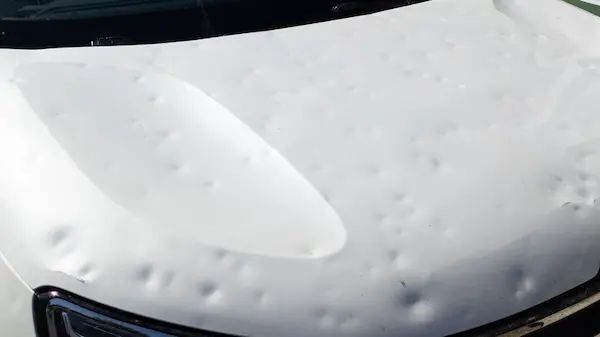
Hail damage on your car? Learn what to do first, how insurance really works, and why paintless dent repair is the smartest way to fix it.
If you live in the Midwest—especially around Chicago—you already know how fast a clear day can turn into a hailstorm.
One minute everything is fine. The next? Your car looks like a golf ball.
Hail damage is one of the most common types of vehicle damage in the U.S., with hundreds of thousands of insurance claims filed every year (State Farm) . But what most people don’t realize is this:
The way you handle hail damage in the first 24–48 hours can determine how smooth (or stressful) the entire process becomes.
Let’s break it down...
What Hail Damage Actually Does to Your Vehicle
Hail doesn’t just leave a few visible dents.
Depending on size and impact, it can cause:
- Dozens (or hundreds) of dents across the hood, roof, and trunk
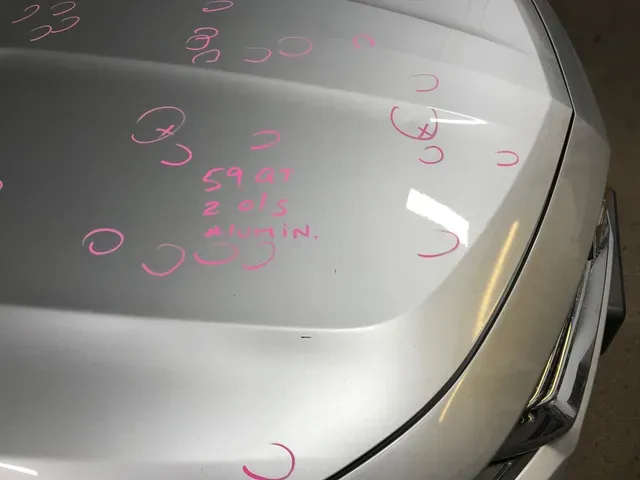
- Damage that’s invisible without proper lighting
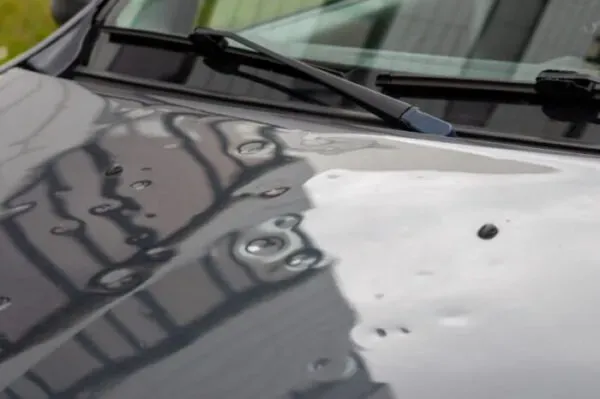
- Cracked or chipped paint
- Broken trim, moldings, or glass
Even small dents matter. Left untreated, they can reduce resale value and potentially lead to long-term issues like corrosion if paint is compromised .
Step 1: Inspect the Damage (The Right Way)
After a storm, most people walk outside, glance at their car, and think:
“It doesn’t look that bad.”
Here’s the truth—hail damage is often missed by the naked eye.
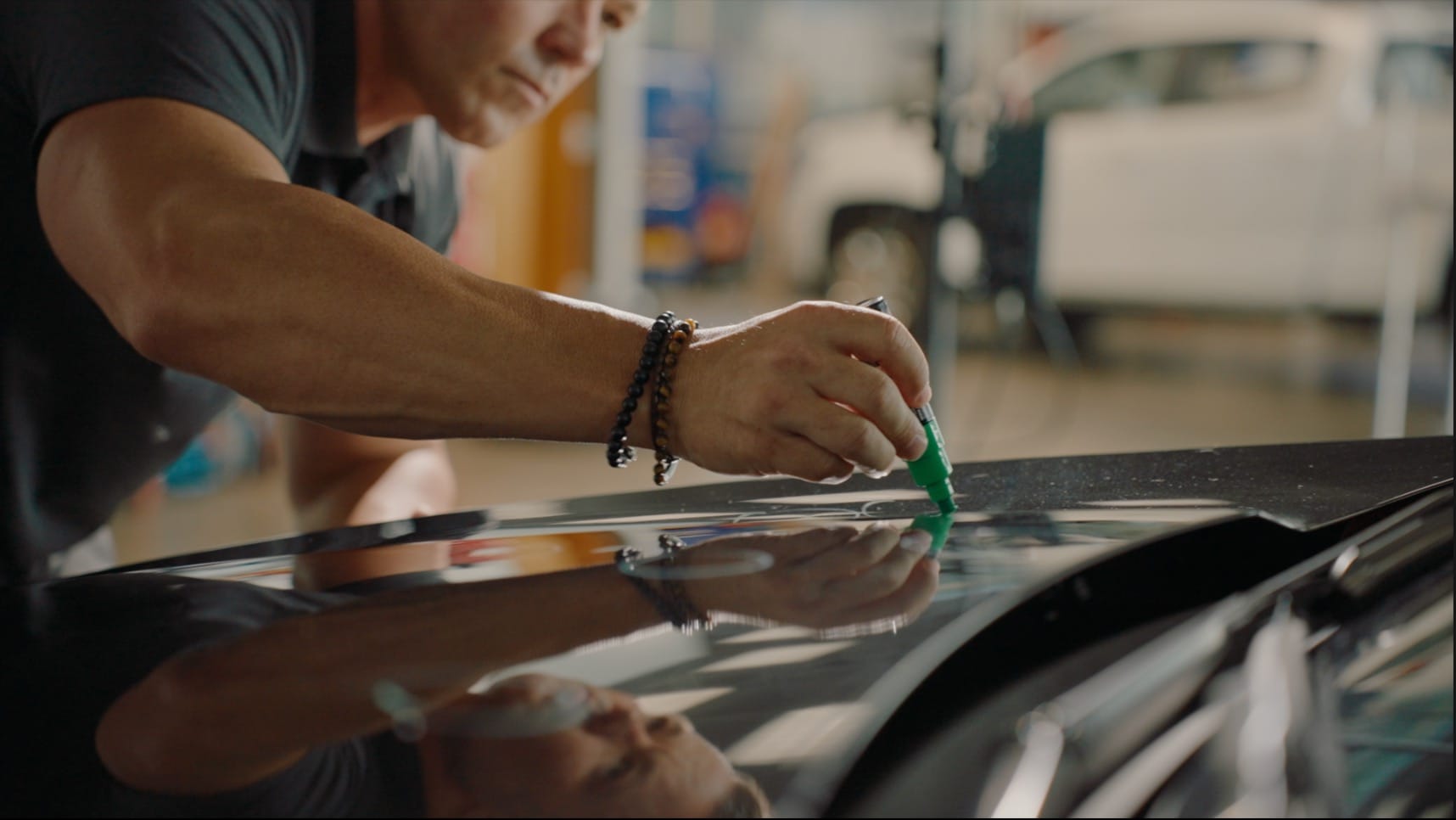
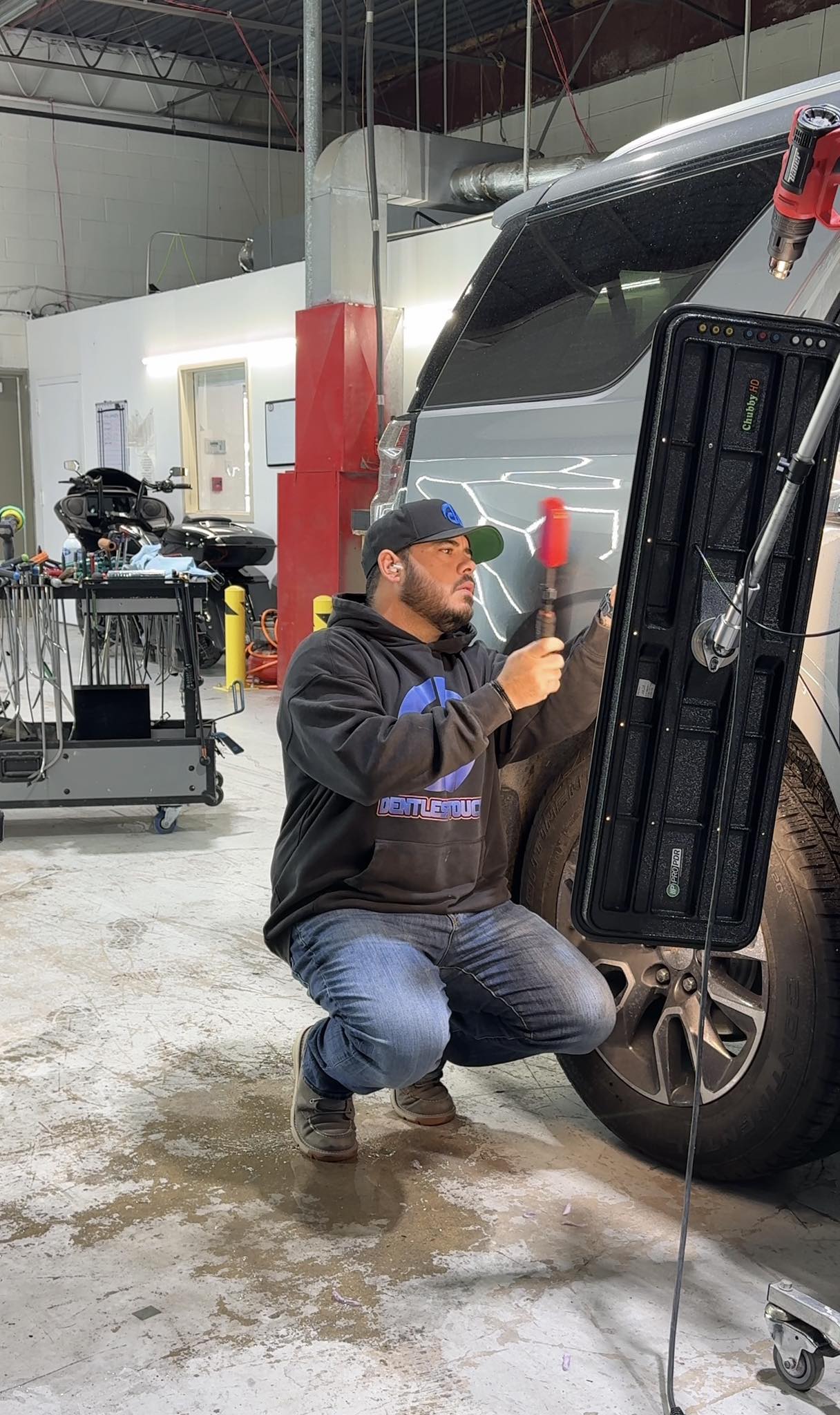
Professional shops use specialized LED lighting to reveal dents that you simply can’t see in normal conditions. Without that, you’re guessing.
What you should do:
- Look at your car in direct sunlight and shaded angles
- Run your hand lightly across panels
- Get a professional inspection before assuming anything
Step 2: Document Everything Before Calling Insurance
Before you even pick up the phone, take photos.
Insurance companies will ask for:
- Multiple angles of the vehicle
- Close-ups of dents and damage
- Date/time of the storm
Proper documentation helps speed up your claim and strengthens your position if the initial estimate comes in low (which… it usually does).
Step 3: File Your Insurance Claim (Don’t Overthink This)
Hail claims fall under comprehensive coverage, which means:
- You’ll only pay your deductible
- Insurance covers the rest
- It typically doesn’t impact you the same way an accident claim would
Here’s the reality:
👉 Waiting doesn’t save you money—it usually just delays the process.
Filing the claim early allows:
- Faster approvals
- Easier scheduling
- Less backlog from storm-related repairs
And if for some reason the damage doesn’t exceed your deductible?
You can always choose not to move forward.
Step 4: Understand the Estimate Game (This Is Where People Get Burned)
This is something most shops won’t explain clearly:
👉 The first insurance estimate is almost always low.
Insurance companies write a preliminary estimate, not a final one.
Why?
Because:
- They can’t see all dents without proper lighting
- They don’t disassemble the vehicle
- They don’t account for hidden damage
A proper repair shop will:
- Re-evaluate the vehicle
- Identify missed damage
- Submit a supplement to the insurance company
This is standard practice—not “upselling.”
Step 5: Choose the Right Repair Method
Not all repairs are created equal.
Paintless Dent Repair (PDR) – The Preferred Method
Paintless Dent Repair is the industry standard for hail damage because it:
- Removes dents without repainting
- Preserves your factory finish
- Maintains your vehicle’s value
- Is faster than traditional bodywork
PDR works as long as the paint surface is intact and is widely used for hail damage repair .
Traditional Body Shop Repair
Used when:
- Paint is cracked
- Metal is overstretched
- Panels need replacement
This involves:
- Sanding
- Filling
- Repainting
Which means:
- Longer repair times
- Higher costs
- Loss of original factory finish
Step 6: What to Expect During Repairs
Typical timeline:
- Light to moderate damage: a few days
- Severe hail damage: 1–2+ weeks
During this process:
- Your insurance may cover a rental (depending on your policy)
- The shop will handle supplements and approvals
- You’ll pay your deductible at the end
Step 7: You Have the Right to Choose Your Shop
This is important.
Insurance companies may recommend a shop.
They cannot force you to use one.
You have the legal right to choose the repair facility you trust.
Why Choosing the Right Shop Matters
Hail repair isn’t just about removing dents—it’s about:
- Accuracy in estimating
- Experience with insurance supplements
- Proper lighting and tools
- Knowing when to repair vs. replace
A poor repair can:
- Leave visible imperfections
- Affect resale value
- Lead to paint failure down the line
Final Thoughts: Don’t Wait
Hail damage isn’t something you want to “get to later.”
The longer you wait:
- The harder it is to prove the damage
- The longer repair timelines get (especially after major storms)
- The more backlog shops build
Need a Hail Damage Inspection in Chicagoland?
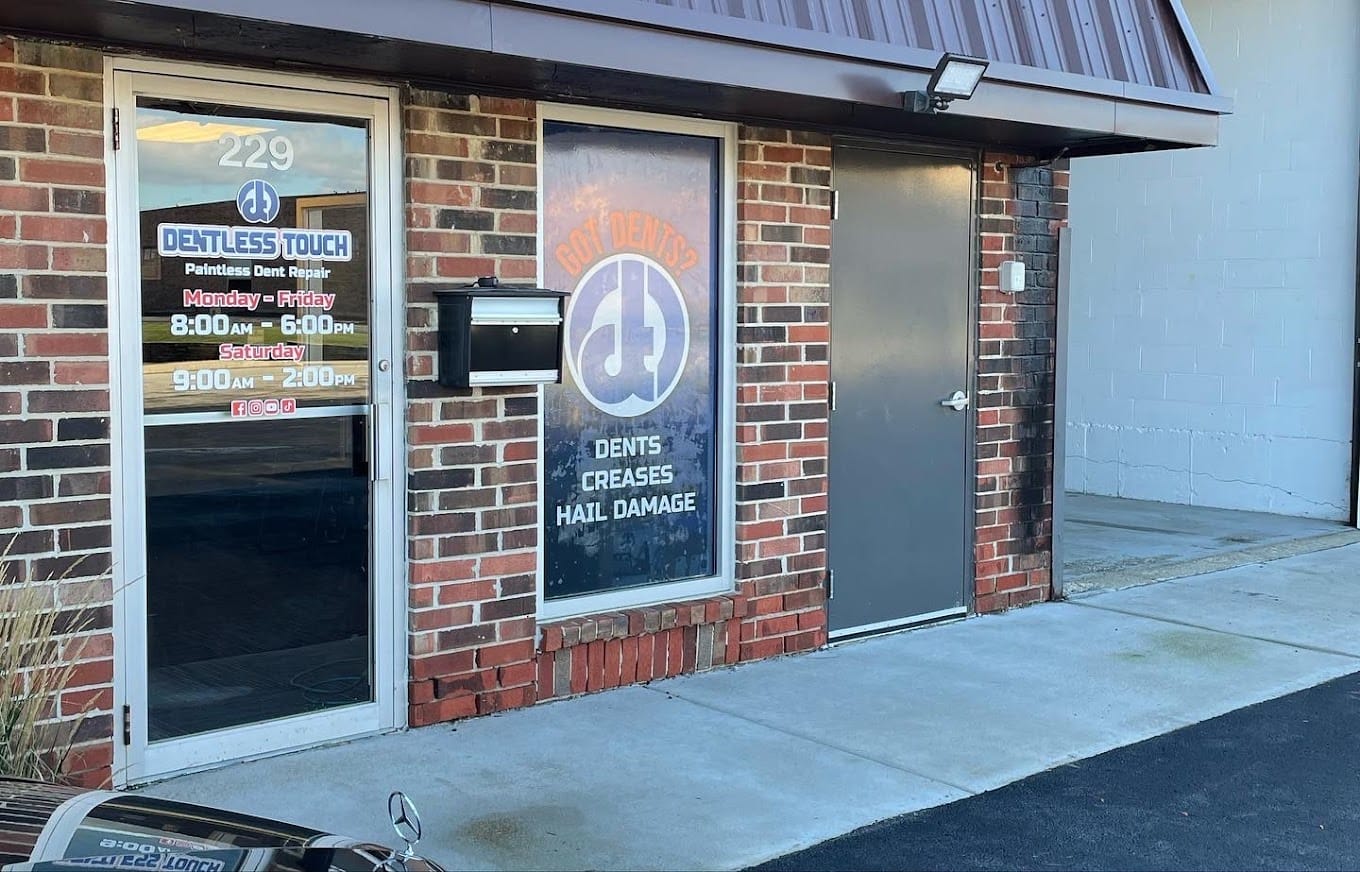
At Dentless Touch Chicago, we specialize in professional hail damage assessment and Paintless Dent Repair.
We:
- Work with all insurance companies
- Use specialized lighting for accurate dent detection
- Handle the supplement process for you
- Focus on preserving your factory finish
📍 Located in Lombard, IL
📞 630-577-2777
💻 www.dentlesstouch.com
If your vehicle was caught in a recent storm, don’t guess—get it checked properly.
Because what you don’t see… is usually what costs the most.
#hail-damage #hail-repair #paintless-dent-repair #dent-repair #chicago #chicagoland #lombard-il #insuranceclaims


Comments ()